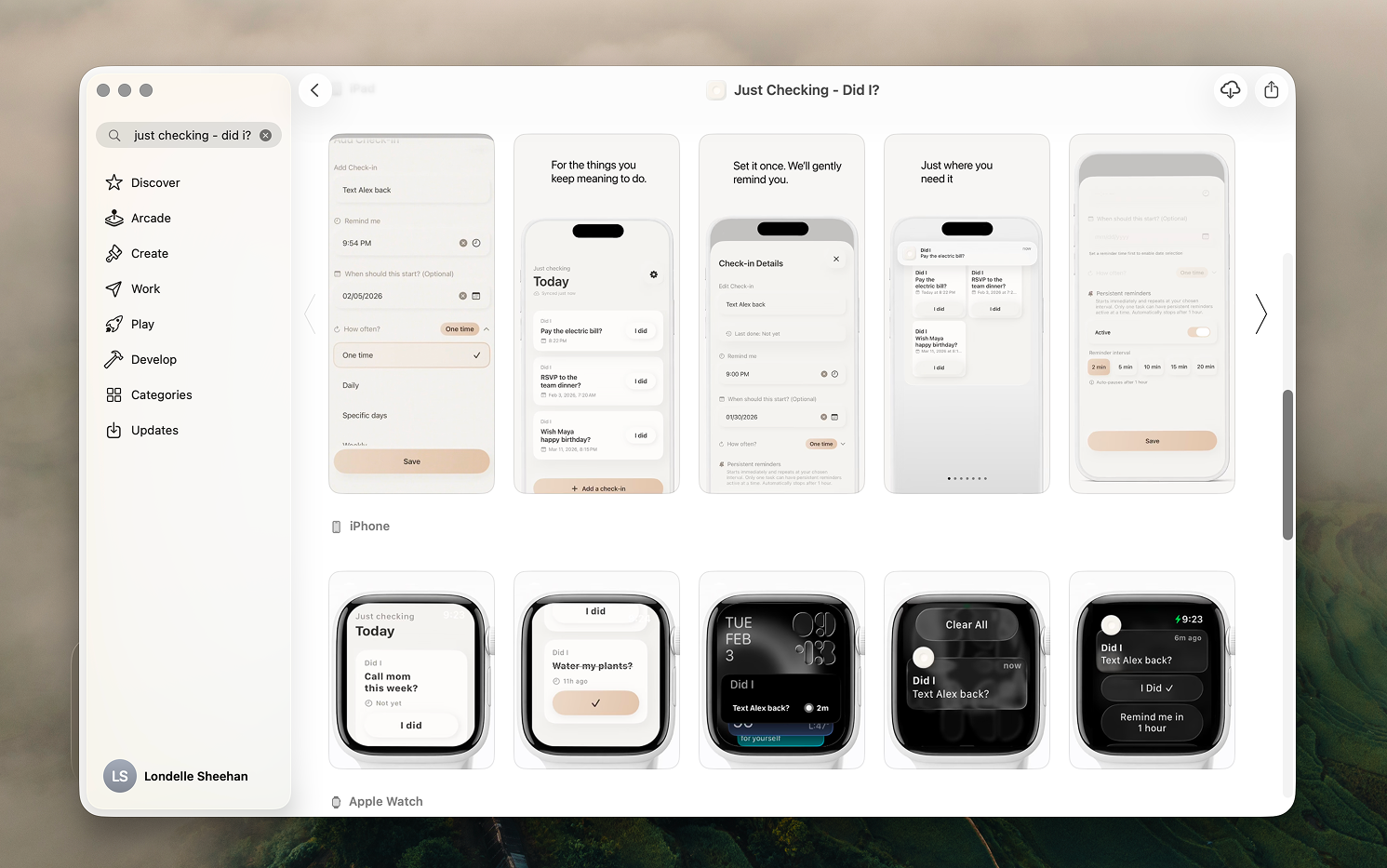
Did I?
I designed and shipped a lightweight app built around the small moments people stop and ask themselves:
“Did I already do that?”

Forgetting wasn’t really the problem
I’d water the plants, feed the dogs, or take my vitamins, then later wonder if I already did it.
Usually I had. I just wanted a quick way to check without turning it into another task manager.
The app became more about reassurance than productivity
Pretty quickly, I realized the app wasn’t really about remembering things.
Most reminder apps are built around tasks that still need to happen. This concept focused more on reassurance and quickly confirming something was already done so people could stop thinking about it.
Adding more features started making the experience worse
I tried adding progress tracking, streaks, and categories.
But the app slowly started turning into the kind of productivity system I was trying to avoid in the first place.
After that, the direction became much clearer. If something made the experience feel heavier or more demanding, it didn’t belong.
The experience needed to happen before opening the app
Most of the time, the question only lasts a few seconds. People are usually multitasking when they stop to wonder if they already did something.
The experience needed to work before the app was even opened. Widgets, lock screen interactions, and Live Activities became a much bigger part of the direction.
Reducing friction became more important than adding functionality
Small things like extra taps, visible reminders, or too much setup immediately started feeling heavier than the problem itself.
Every time the app tried to be “more helpful,” it usually became worse.
Over time, the product became less about productivity and more about reducing a tiny moment of uncertainty.
I shipped the app to iOS and still use it almost every day
I built and shipped the app for iOS to prove that a product could succeed by doing less. Today, it lives on my main screen and completely handles those tiny moments of uncertainty without adding digital noise. It quietly became a tool I rely on every day.