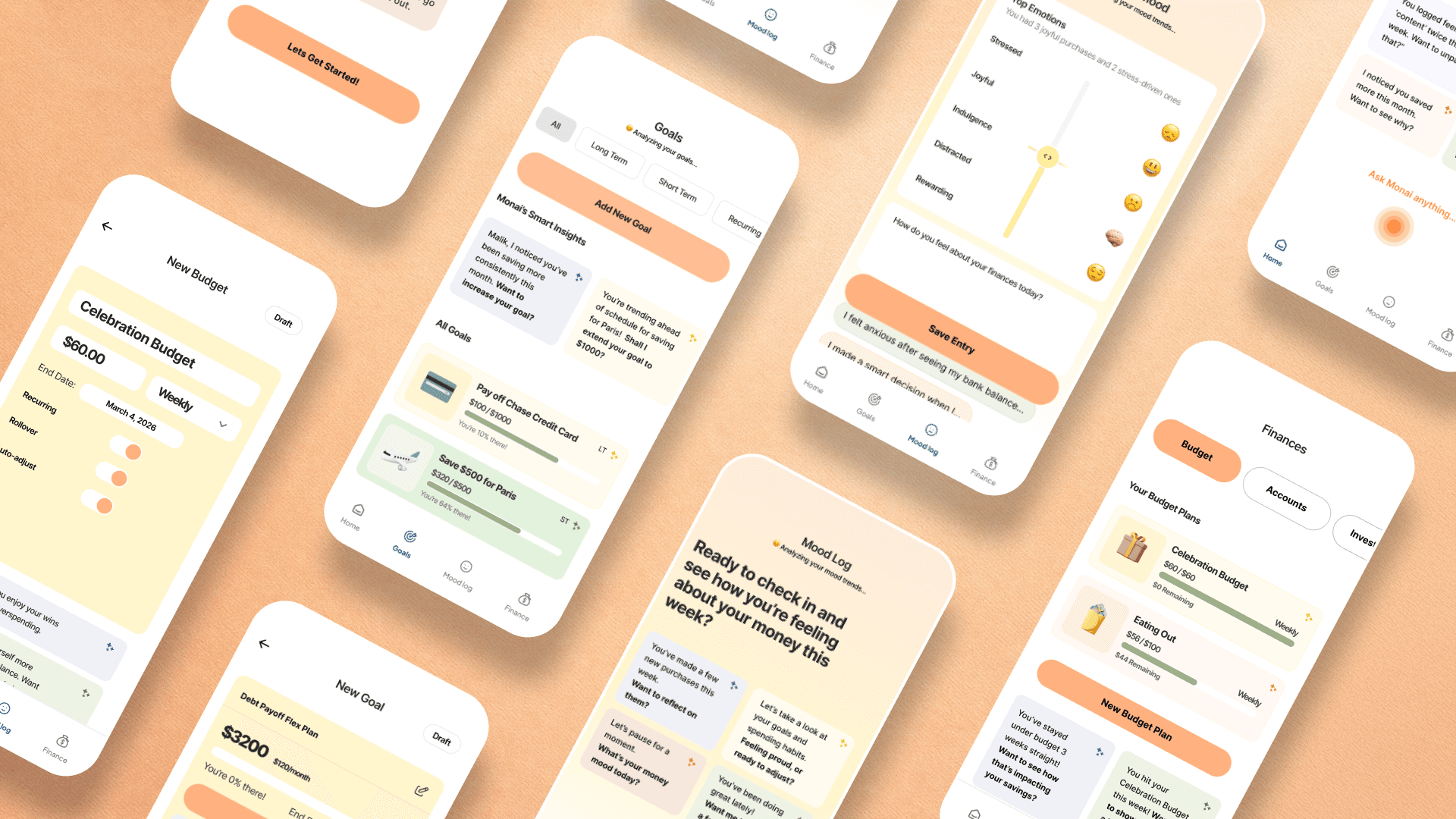
Monai
Most budgeting apps focus heavily on numbers, metrics, and optimization, which often makes people feel stressed when they fall behind.
I wanted to see what a personal finance app would look like if it focused on the behavioral habits behind spending rather than just tracking transactions.
A lot of finance apps become stressful the moment people fall behind
Missing goals, overspending, or stopping routines often turns budgeting into something people avoid altogether.
Monai explores a softer approach that is focused more on reflection than correction.
The design focused on repeated behavior rather than forcing strict numerical targets
While working on the app, I became more interested in the smaller patterns behind people’s spending instead of only tracking transactions and budgets.
Instead of focusing purely on numbers, Monai looked for repeated habits, lightweight budgeting adjustments, and smaller moments for reflection around spending behavior.
I wanted the experience to feel more supportive than analytical.
Transactions are usually tied to emotional routines or stress
While working on Monai, I kept noticing how often spending behavior connected to impulse purchases, or small reward habits.
Most finance apps only tracked the transaction itself.
I wanted Monai to pay a little more attention to the behavior around it instead.
Natural conversations were easier to return to than charts and reports
At first, the conversational parts of Monai mostly existed to support budgeting and spending summaries.
But the more I worked on the product, the more those interactions started feeling easier to return to than charts, reports, or financial breakdowns.
The conversations made it easier to talk about spending habits in a more natural way instead of constantly reducing everything to metrics and optimization.
Over time, that started influencing more of the product direction.
Finance tools should support habit-building instead of dominating the entire experience
Monai still included budgeting, account tracking, debt, and investments, but I tried keeping those parts of the app quieter and easier to navigate.
I wasn’t interested in building another finance dashboard full of analytics and spending tracking.
Behavioral prompts felt more natural than turning financial choices into a goal or score
Sometimes the app would notice a spending habit, routine change, or small behavioral pattern and surface it as a quiet prompt instead of a full recommendation.
Building for long-term engagement by removing user guilt
I designed Monai to fix the main reason people abandon budgeting apps: the shame of falling behind.
By replacing complex charts with simple, conversational check-ins, the app keeps users engaged instead of making them want to avoid their finances entirely.
It proves that designing a softer, more supportive experience is actually the best strategy for keeping people around.